“Black October”: attackers raid secrets at cloud and AI developer platforms
Northflank has told every customer to assume their environment variables were decrypted, after stolen AI API keys were used. Wiz now counts incidents at more than a dozen AI developer platforms since early October, all hunting for the same thing: stored secrets.
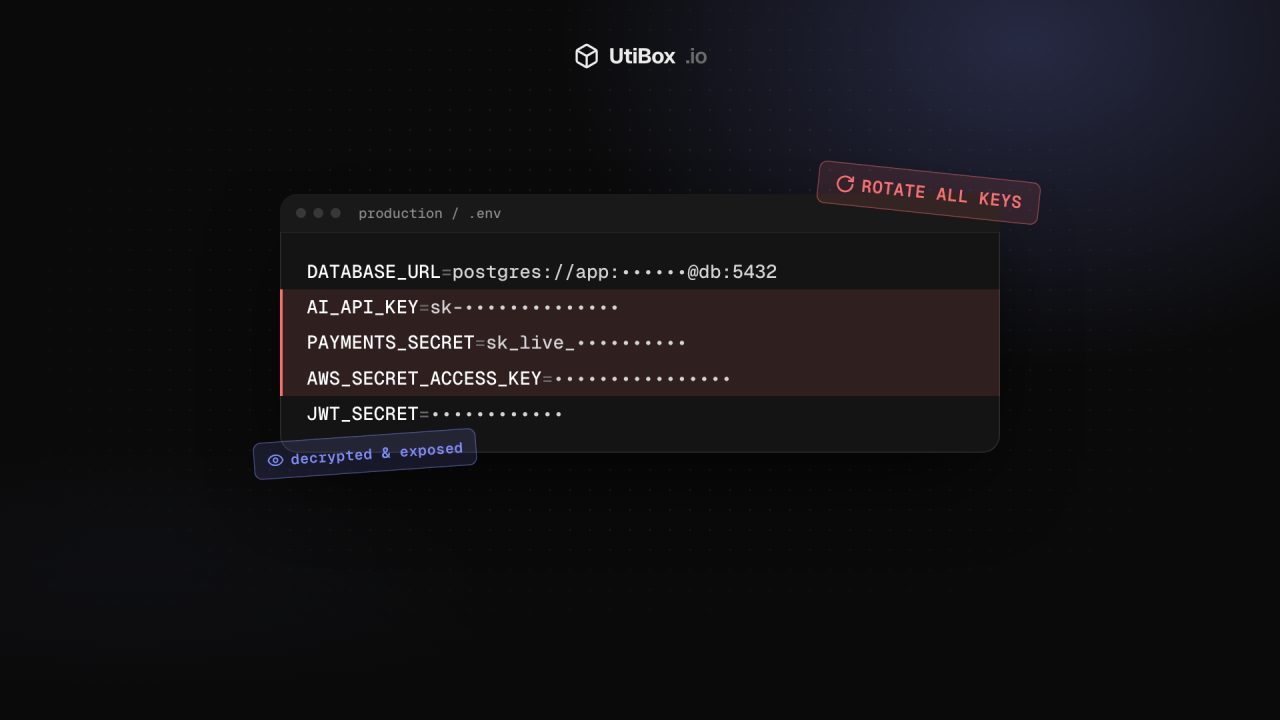
Illustration: UtiBox
On this page 6 sections
If you deploy apps on a hosted developer platform, October 2026 was a bad month to keep your secrets there.
Northflank: “Assume all environment variables have been decrypted”
Northflank, a cloud platform for running containers, databases and AI apps without managing servers, opened an incident on its status page on 30 October 2026. Its first update, at 13:40 UTC, told customers to rotate their environment variables immediately. Eighteen minutes later it went further:
Assume all environment variables have been decrypted. Disable/rotate all keys.
Northflank status page, 30 October 2026
By that evening the company reported that customers’ AI API keys stored on the platform had been used by someone else. In later updates Northflank said:
- The attack appears to have been focused on secrets held in its control plane.
- The first known decryption of secrets happened between 02:39 and 03:08 UTC on 30 October.
- It has found no evidence that customer workloads or workload data were accessed.
Northflank asked every customer to rotate all secrets (AI provider keys, cloud credentials, payment keys, private keys and database passwords) even if they hadn’t seen anything suspicious. It added one-click credential rotation for its managed PostgreSQL, MongoDB, MySQL, Redis, MinIO and RabbitMQ add-ons, turned on audit logs for every customer including free accounts, and revoked some access tokens, sessions and source-control connections, so users need to sign in and reconnect.
Not just one platform
The cloud security firm Wiz, which says it is tracking the campaign, calls it “Black October”. Its report lists incidents disclosed at Fireworks AI, Andromeda, Zeabur, Lightning AI, OpenCode, Railway, Warp, CommandCode and Northflank during October, and has since added NVIDIA’s Brev, Chainstack, Trigger.dev, kernel.sh and Blacksmith.
According to Wiz, the public reports describe attackers explicitly hunting stored environment variables, especially those that grant access to AI services. Wiz also says there is no single vulnerability or dependency linking the incidents, and it doesn’t attribute them to one group.
Why stolen AI keys are worth so much
Environment variables are where modern apps keep the keys to everything else, and AI keys turn straight into money: attackers resell the access or run their own workloads on someone else’s bill. This is known as LLMjacking.
Wiz describes two cases from this campaign:
- One stolen key made about 800,000 Amazon Bedrock calls over roughly 30 hours before it was shut off.
- Another made about 1.7 million calls over roughly 13 hours.
At list prices, Wiz estimates the two cases together “likely ran up over $100k in usage”.
What to do if you use one of these platforms
- Rotate first, investigate second. Change every secret the platform held, starting with the ones that cost money or unlock other systems: cloud credentials, payment keys, AI keys and database passwords.
- Revoke, don’t just add. A new key doesn’t help if the old one still works. Delete or disable the old one once the new one is deployed.
- Read the bills. Check AI providers’ and cloud usage dashboards for spikes since early October, and set spending limits and alerts wherever the provider offers them.
- Check the logs of the services those keys unlock, not just the platform’s own logs.
We’ve written a step-by-step guide for exactly this situation: Leaked an API key? How to rotate secrets without breaking production.
The bigger lesson
A hosting platform that holds your environment variables holds your keys. The best defence is to make those keys less valuable when they leak: give each key the smallest set of permissions it needs, set spending caps on anything billed by usage, use short-lived credentials where your cloud provider supports them, and know exactly where every secret lives so you can rotate them all in an afternoon rather than a week.
Sources
Related


More from Server & Security News

A fake job interview opened the door to Binance’s $6.3 billion heist
The FBI says North Korea stole more than $6 billion from Binance on or about 29 October. Binance’s incident report says it began with fake job interviews and a booby-trapped coding test. Here’s how…


